
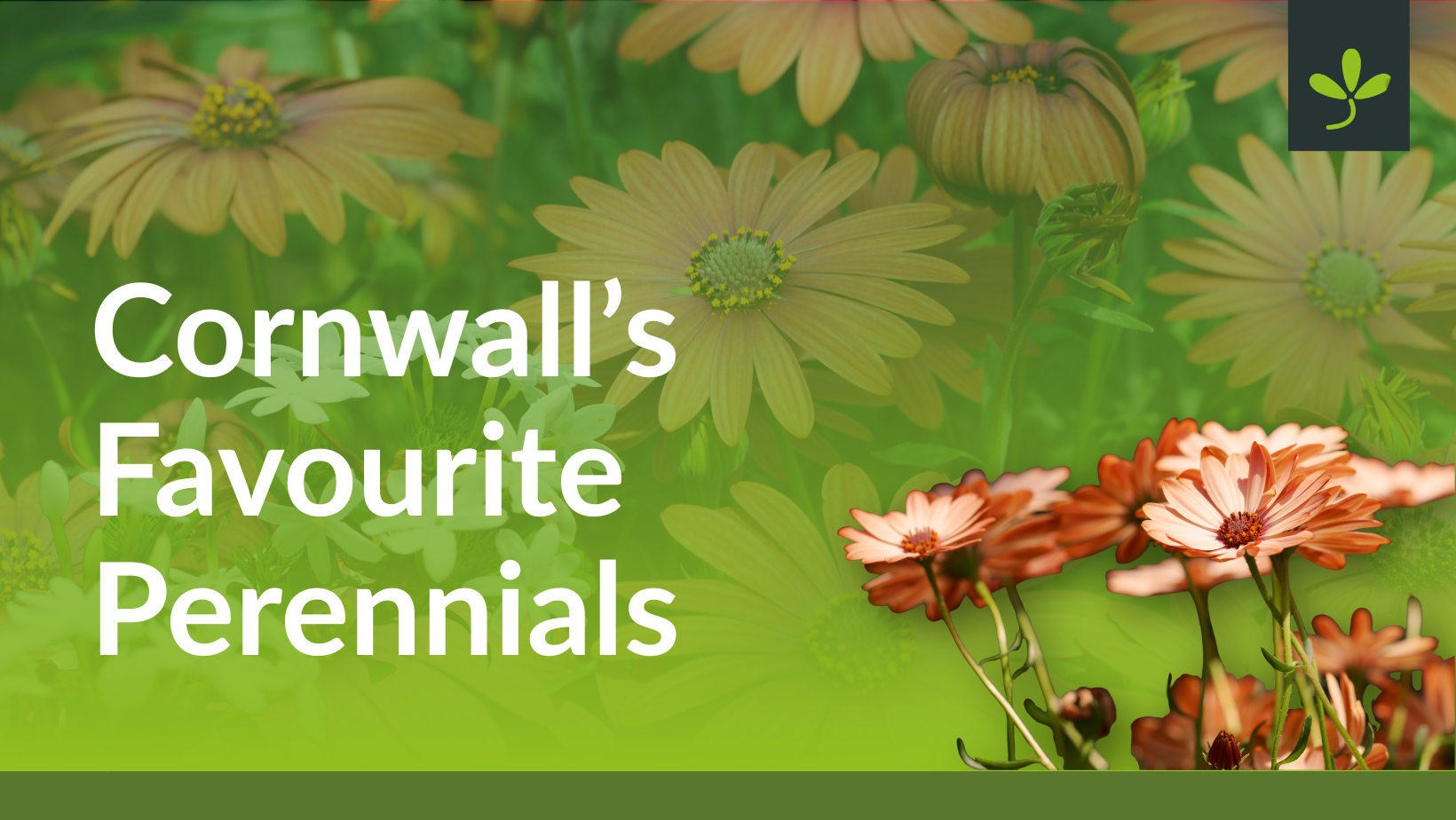
There are hundreds of perennials, but which ones do real Cornish gardeners come back to year after year?
Ask ten gardeners to name their favourite perennial and you are likely to get ten different answers.
Some gardeners cannot imagine a summer border without the towering blooms of Delphiniums. Others wait all year for the scent of Lavender, while many simply love a plant that quietly returns every spring without asking for much in return.
Perennials have earned their place in British gardens because they offer something annual bedding plants cannot. They grow stronger year after year, provide dependable colour, support pollinators and often become treasured parts of the garden for decades.
So, we thought we'd settle the debate, at least here in Cornwall.
Over the past month, we invited customers visiting our garden centres to vote for their one favourite perennial.
Every person could cast just one vote, either by scanning a QR code or writing their answer at the tills.
In total, 77 local gardeners took part, and while the results confirmed some much loved classics, there were also a few surprises...
As Beth Chatto once said,
"The right plant in the right place."
Looking at the results, these are certainly plants that have found the right place in the hearts of you, our Cornish gardeners!
🌼 No. 1 – Osteospermum (African Daisy)
Chosen by 16% of our customers
Taking the top spot was Osteospermum, and it is easy to understand why.
Native to South Africa, Osteospermums have adapted to thrive in warm, sunny conditions, making them ideal for bright borders, containers and patio displays. Their cheerful daisy like flowers appear in an incredible range of colours, from crisp white and sunshine yellow to deep purple, pink and orange.
One of the most fascinating characteristics of Osteospermums is that many varieties close their flowers overnight or during dull weather before reopening when the sunshine returns.
Plant Fact File
Also known as: African Daisy or Cape Daisy
Height: 20 to 50cm
Spread: 30 to 45cm
Flowering season: May until the first frosts
Position: Full sun
Best for: Borders, containers, gravel gardens and coastal planting
Growing Tip
Although Osteospermums flower for months, they are surprisingly drought tolerant once established. Plant them in free draining soil and avoid overwatering, as wet roots are one of the few things they dislike. Regular deadheading will encourage fresh flowers throughout the season.
🌿 No. 2 – Hydrangeas
Voted for by 14% of customers
Only one vote behind the winner came the much loved Hydrangea, a shrub that has become synonymous with British summer gardens.
Originally native to Japan, China and Korea, Hydrangeas are admired for their enormous flower heads and exceptionally long flowering season. As autumn approaches, many varieties develop beautiful antique shades of burgundy, green and bronze before providing winter interest with their dried flower heads.
Plant Fact File
Height: 1 to 2 metres (depending on variety)
Flowering season: July to October
Position: Morning sun with afternoon shade or partial shade
Best for: Cottage gardens, borders and feature planting
Did You Know?
Some Hydrangeas can naturally change flower colour depending on the acidity of the soil. Acidic soils often produce blue flowers, while alkaline soils encourage pink blooms. White flowering varieties generally remain white regardless of soil conditions.
Growing Tip
Leave spent flower heads in place over winter. They provide beautiful seasonal interest while helping to protect next year's flower buds from frost damage.
🌸 Joint Third Place – Peonies & Roses
Each receiving 8% of the vote
Some plants never go out of fashion, and Peonies and Roses have remained garden favourites for generations.
Peonies
Few flowers make quite the same impression as a fully opened Peony. Their enormous blooms, rich fragrance and remarkable longevity have made them treasured garden plants for centuries.
The name "Peony" comes from Greek mythology, where Paeon was believed to be the physician of the gods. Some established Peony plants are known to survive and flower for more than 100 years, often being passed down through generations of gardeners.
Plant Fact File
Height: 60 to 100cm
Flowering season: Late spring to early summer
Position: Full sun or light shade
Lifespan: Often several decades
Growing Tip
Peonies dislike being planted too deeply. The buds, often called "eyes", should sit only a few centimetres below the soil surface. Planting them too deep is one of the most common reasons they fail to flower.
Roses
Although technically woody shrubs rather than herbaceous perennials, our customers clearly could not imagine a garden without Roses.
Cultivated for thousands of years, Roses remain one of Britain's most iconic garden plants thanks to their fragrance, repeat flowering and incredible diversity.
The oldest known living rose is believed to be more than 1,000 years old, still growing against the wall of Hildesheim Cathedral in Germany.
Plant Fact File
Height: Varies from 60cm patio roses to climbing varieties over 4 metres
Flowering season: June until autumn for repeat flowering varieties
Position: Full sun
Best for: Borders, pergolas, arches and cottage gardens
Growing Tip
Feed Roses in spring and again after their first flush of flowers. Regular deadheading and good airflow around the plant help keep them healthy and encourage repeat flowering throughout the summer.
Other Customer Favourites
The survey did not stop with the podium places.
Lavender followed with 6% of the vote, loved for its calming fragrance, evergreen foliage and value to bees and butterflies.
Geraniums and Agapanthus each received 5%, proving that dependable, long flowering plants continue to be firm favourites among Cornish gardeners.
Meanwhile Dahlias, Rudbeckias and Jasmine all featured strongly, each receiving 4% of the vote thanks to their ability to provide colour well into late summer and autumn.
The remaining votes were spread across an impressive range of garden favourites, including Red Hot Poker, Delphiniums, Daffodils, Berberis, Coreopsis, Verbena, Heuchera, Lady's Mantle, Salvia, Bleeding Heart, Foxgloves, Astilbe, Hibiscus, Fuchsia, Tulips, Hollyhocks and Wisteria.
Together they demonstrate just how diverse perennial planting can be, with something to suit every style of garden.
What This Tells Us
Perhaps the most interesting thing about our survey was not which plant came first.
It was that no single perennial dominated the results.
Every gardener has different tastes, different growing conditions and different memories attached to the plants they grow. Some choose flowers for their colour, others for their fragrance, their wildlife value or simply because they remind them of a family member's garden.
That diversity is exactly what makes gardening so enjoyable.
Whether your favourite perennial topped our poll or received just a single vote, the best perennial is always the one that makes you smile each time it comes back into flower.
If you are looking to add a new perennial to your garden, visit us in store. Our plant team are always happy to recommend varieties that suit your soil, your garden and your style because your next favourite perennial could already be waiting for you.